A mobile banking experience that turns financial complexity into confident everyday decisions.
Finwise explores how a calm, accessible product experience can help people understand spending, transfer money safely, and build stronger savings habits.


Finwise explores how a calm, accessible product experience can help people understand spending, transfer money safely, and build stronger savings habits.
I led the initiative from discovery through high-fidelity product design, connecting research insights to the interaction model and visual system.
Research synthesis, competitive analysis, information architecture, user flows, wireframing, interaction design, prototyping, usability evaluation, accessibility, and design-system foundations.
Research plan, persona, journey map, core task flows, wireframes, interactive prototype, six key product screens, testing insights, and scalable UI foundations.
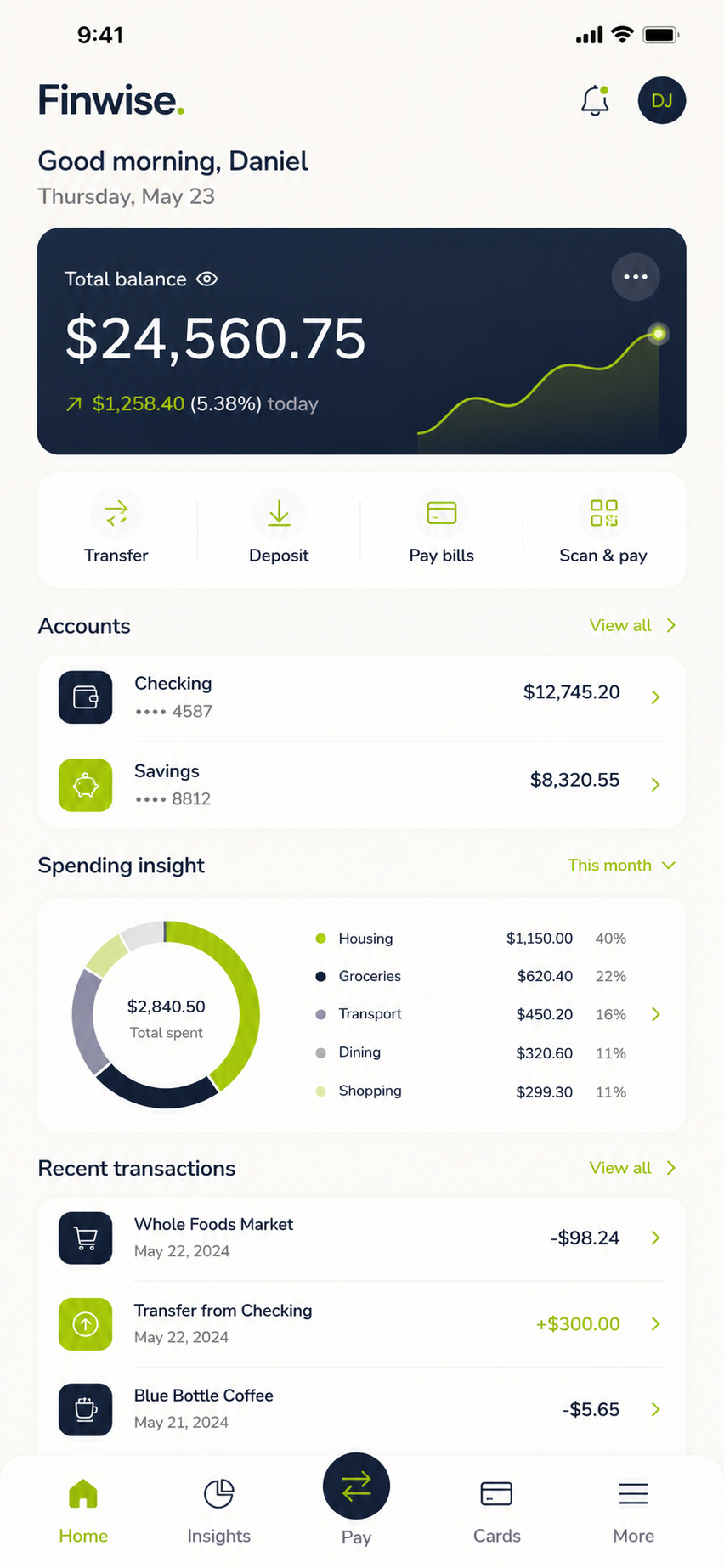
Finwise brings balances, spending insights, secure transfers, and savings goals into one focused mobile experience. The product uses plain language and proactive guidance to help people make informed decisions without requiring financial expertise.
Competitive analysis showed that many banking apps prioritize feature density over confidence, leaving users uncertain about spending, transfers, and progress toward savings goals. Finwise needed to simplify high-frequency tasks while communicating trust at every step.
People need an immediate, understandable view of balances, upcoming payments, and recent activity.
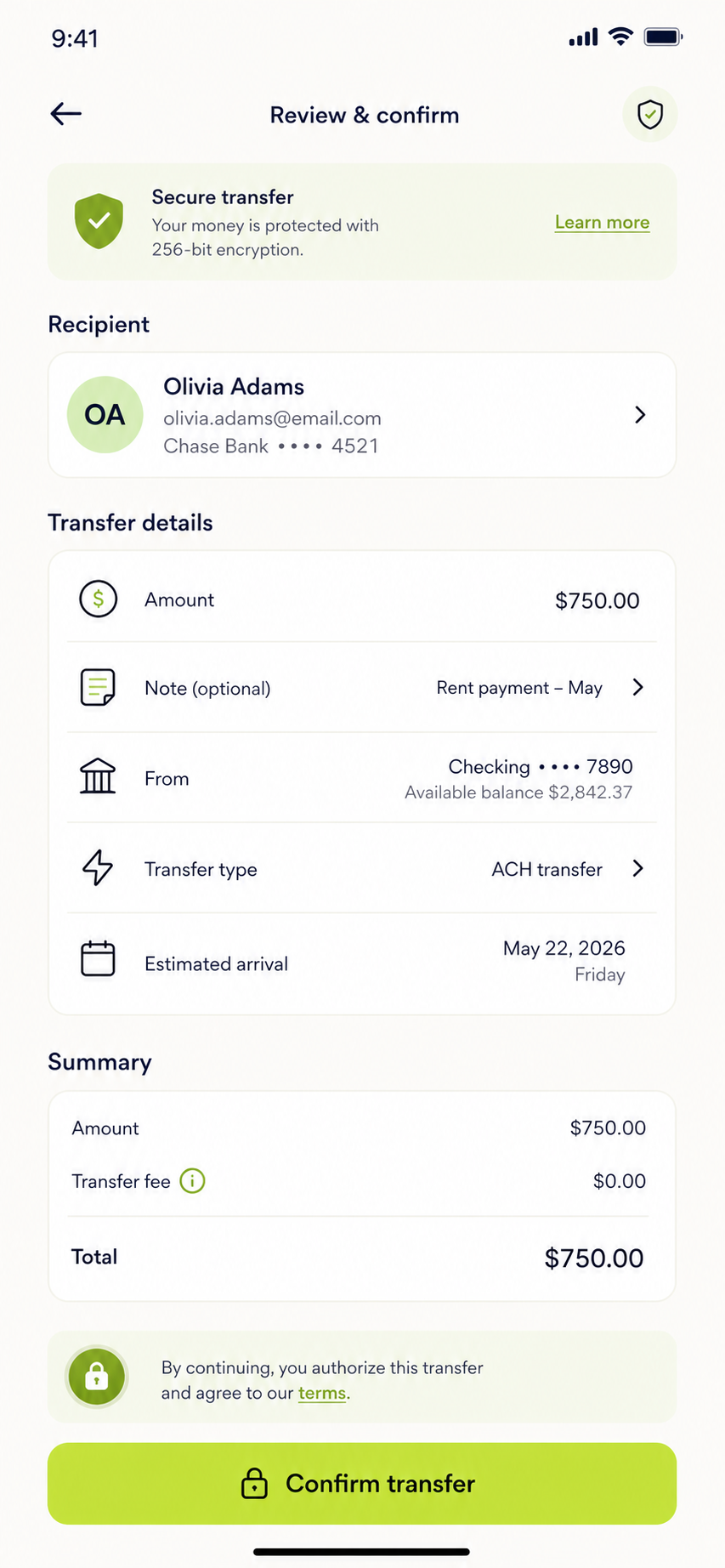
Transfers need transparent confirmation, clear status, and guardrails that reduce costly mistakes.
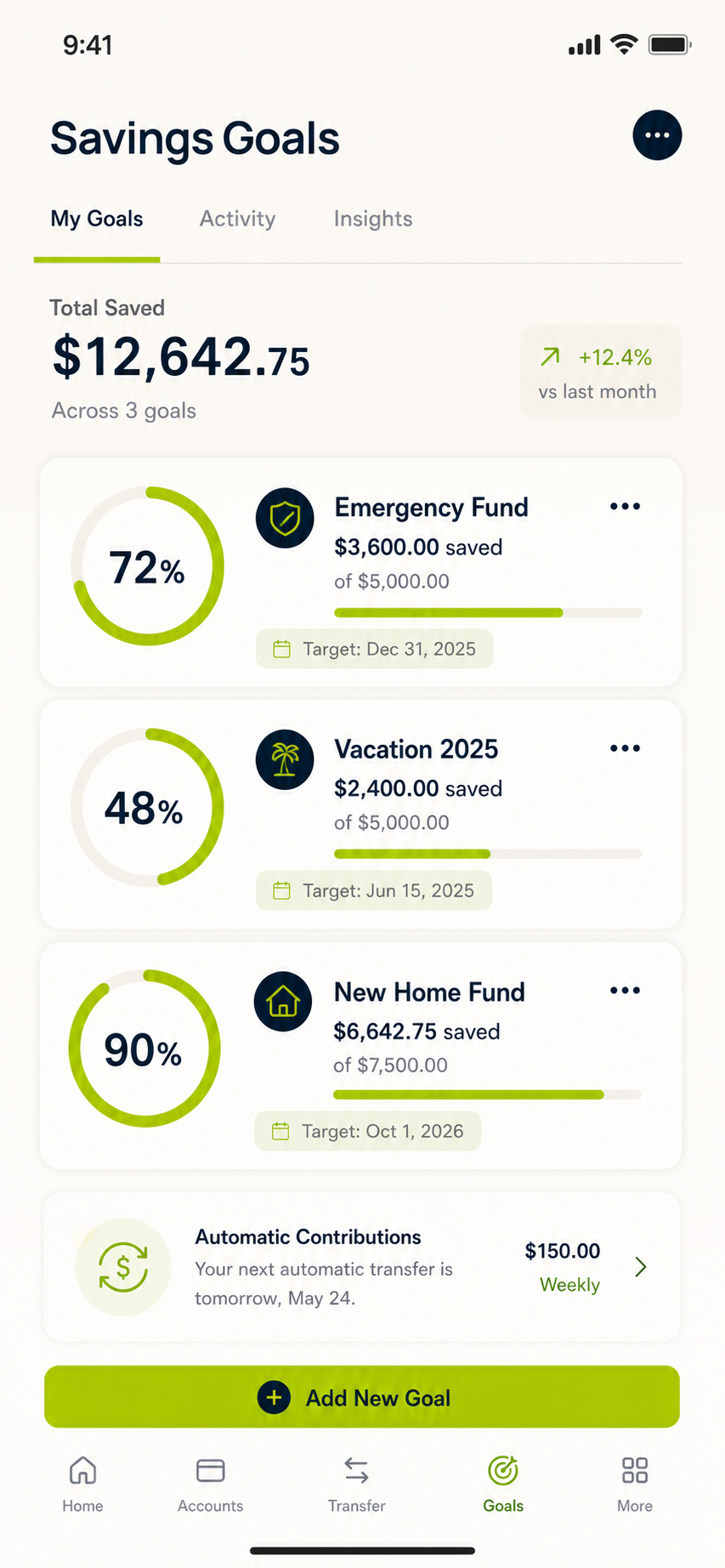
Savings feels more motivating when goals, momentum, and next actions are easy to understand.
I moved from competitive analysis and research synthesis into journey mapping, task flows, wireframing, interactive prototyping, and usability evaluation. Each phase narrowed uncertainty and translated user needs into clear product decisions.
People move between multiple screens to understand balances, transactions, and upcoming payments.
Financial actions create anxiety when fees, timing, and confirmation states are difficult to understand.
Charts feel less valuable when they do not connect directly to a clear next action.
Actively manages her money but finds traditional banking tools fragmented and overly technical.
“Show me what matters and what I should do next.”
Manages variable monthly income and needs a reliable way to plan bills, taxes, and savings.
“Help me prepare for the months that look different.”
Wants to establish healthy financial habits while learning how credit, savings, and budgeting work.
“Make money management feel less intimidating.”
Hidden fees, unclear timing, fragmented information, anxiety before confirming actions.
Clear next steps, visible progress, trustworthy confirmation, and calm financial control.
Navy supports trust, lime highlights action, and warm neutrals reduce visual fatigue.
Dining spend is down 12%
Participants wanted fees, arrival timing, and recipient verification before confirming.
Reducing chart density made the most useful spending signal easier to understand.
Clearer labels, stronger contrast, and consistent hierarchy improved task confidence.
The final direction pairs a clear account overview with contextual insights, transparent transfer confirmation, and visible savings progress. Consistent hierarchy and accessible interaction patterns help people act with confidence.
Explore the account dashboard, complete a secure transfer, contribute to a savings goal, and review spending insights.


Added recipient verification, fee visibility, and a plain-language confirmation summary before submission.
Reduced dashboard chart density and surfaced one meaningful spending insight at a time.
Improved contrast, simplified labels, and created consistent information hierarchy across flows.